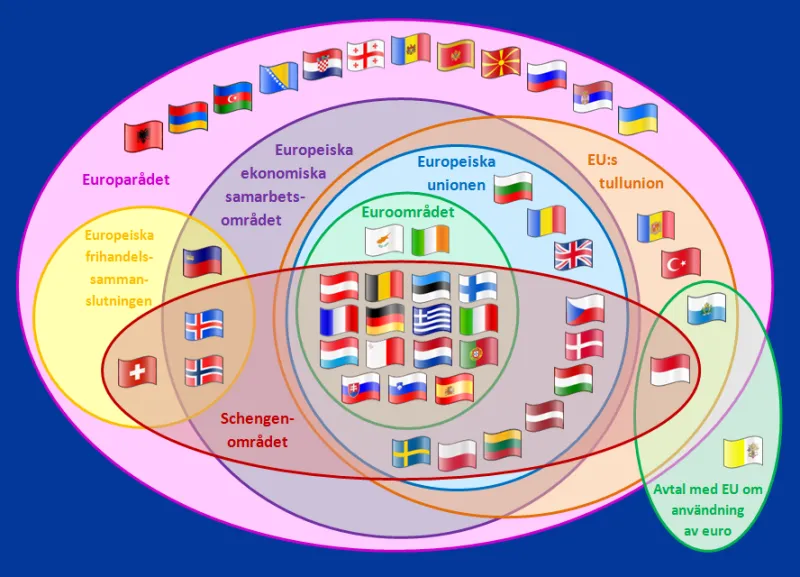
EU Customs Holds Are Not Bad Luck — They Are Preventable: What US Exporters Keep Getting Wrong
Photo: Wdcf, CC BY-SA 3.0, via Wikimedia Commons
The Delay Nobody Budgets For
When a US-based medical device manufacturer shipped a $2.3 million order to a German distributor last year, the shipment sat at the Port of Hamburg for 19 days. The reason had nothing to do with product quality, pricing, or logistics capacity. A single line on the Declaration of Conformity referenced an outdated EU directive — one that had been superseded 14 months earlier. The cost: expedited storage fees, a renegotiated delivery penalty, and a distributor relationship that took a year to repair.
This kind of outcome is far more common than most US exporters acknowledge. European customs authorities operate under one of the world's most layered regulatory frameworks, and the documentation requirements embedded within it are both precise and unforgiving. Yet many American companies approach EU compliance as an afterthought — something handled in the final days before a shipment, rather than engineered into the product and trade workflow from the start.
The result is a quiet, recurring drain on margins that rarely appears as a line item in quarterly reports but accumulates into significant losses over time.
Why EU Documentation Is Different From Any Other Market
The United States and the European Union have a robust trade relationship, with bilateral goods trade exceeding $800 billion annually. But the regulatory philosophies underpinning each market are fundamentally different. The US system is largely post-market in its approach — products enter, and enforcement acts on problems after the fact. The EU system is pre-market by design. Before goods cross an EU border, the exporter must demonstrate compliance with applicable directives, standards, and labeling requirements.
This distinction has enormous practical consequences. In the US, a company might ship a product and address regulatory questions reactively. In the EU, the absence of the correct documentation at the point of entry is itself a violation — one that triggers an automatic hold regardless of the product's actual safety or quality.
For US exporters, the most commonly misunderstood elements include:
- CE Marking requirements: The CE mark is not a quality seal — it is a legal declaration that a product meets specific EU directives. Affixing a CE mark without completing the full conformity assessment process, including a proper Technical File and Declaration of Conformity, can result in market bans and financial penalties.
- REACH compliance documentation: Companies exporting chemical substances or products containing them must provide Safety Data Sheets and substance declarations that meet current REACH regulation standards. Many US exporters use outdated SDS formats that do not satisfy EU requirements.
- Country of origin declarations: EU customs authorities apply strict rules of origin criteria. A product assembled in the US from Asian-sourced components may face additional scrutiny if origin documentation is incomplete or inconsistent with the Bill of Materials.
- Importer of Record obligations: Many US exporters do not realize that the EU requires a legal entity established within the EU to serve as the importer of record for certain regulated categories. Without this designation properly documented, the shipment has no legal standing to clear customs.
The Certifications That Vary by Industry — And Why That Matters
One of the most dangerous assumptions US exporters make is that EU compliance is a single, unified checklist. In practice, the required documentation varies significantly by product category, and changes to directives can invalidate previously compliant documentation without warning.
Electronics and electrical equipment must comply with the Low Voltage Directive, the EMC Directive, and — for products containing batteries or wireless components — additional specific directives. Technical documentation must be retained for ten years and be accessible to EU market surveillance authorities upon request.
Food and agricultural products require export health certificates issued by USDA-accredited authorities, EU-approved establishment numbers, and in some cases, prior authorization through the EU's TRACES NT notification system. Post-Brexit, the UK and EU now maintain separate requirements, a distinction that continues to catch US exporters off guard.
Industrial machinery falls under the EU Machinery Directive, requiring a risk assessment, technical construction file, and operator instructions in the language of the destination country. Shipping machinery with English-only documentation into a French or Spanish-speaking EU market is a routine compliance failure.
Cosmetics and personal care products must comply with the EU Cosmetics Regulation, which requires a Cosmetic Product Safety Report prepared by a qualified EU-based assessor, a product information file, and notification through the EU's Cosmetic Products Notification Portal before the product enters the market.
Case Study: The Cost of a Mislabeled Shipment
A mid-sized US consumer electronics company entered the Dutch market through an e-commerce partnership in 2022. The company had invested heavily in product development and logistics but allocated minimal resources to compliance review. Their CE declarations referenced the correct directives but failed to include the four-digit notified body identification number required for products in a specific risk category.
The shipment was flagged at Rotterdam. Customs placed a hold pending verification of the conformity assessment process. The company's European partner had no access to the original technical files, which were held by the US engineering team operating in a different time zone. Resolution took 11 business days. By then, the promotional window for the product launch had passed, the partner had canceled a follow-on order, and the company had incurred approximately $180,000 in combined storage, expediting, and lost-revenue costs.
The compliance gap that caused this outcome could have been addressed in a single documentation review prior to shipment.
Building a Compliance Infrastructure That Travels With Your Product
The companies that export successfully into the EU on a consistent basis share a common characteristic: they treat compliance as a product attribute, not a shipping formality. Documentation is assembled and reviewed during product development, not during the week of shipment.
Practically, this means maintaining a living document library for each product exported to the EU — one that tracks applicable directives, current certification status, expiration dates for any time-limited approvals, and the identity of EU-authorized representatives. It also means establishing a relationship with a qualified EU compliance consultant or notified body before a shipment is ever booked.
For US exporters operating at scale, integrating compliance checkpoints into the ERP or trade management system ensures that no shipment is initiated without verified documentation attached to the commercial invoice and packing list.
The EU market rewards preparation. For companies willing to build that infrastructure, it represents one of the most stable and high-value export destinations available to US businesses. For those who treat documentation as an afterthought, it will continue to be an expensive and frustrating lesson — repeated with each delayed shipment.
The border does not negotiate. The documentation either meets the standard, or the shipment waits.