Indonesia Uncovered: The Sourcing Powerhouse US Importers Keep Passing Over
Photo by Photo by Rendy Novantino on Unsplash on Unsplash
For years, the conversation around Southeast Asian sourcing has revolved around a familiar cast of countries. Vietnam earned its reputation through electronics and apparel. Thailand built credibility in automotive components and processed foods. Both remain legitimate options. But a third contender — larger than either, more resource-rich than most, and increasingly competitive on cost — has been underutilized by American importers who simply haven't taken the time to understand it.
Indonesia, an archipelago of over 17,000 islands and a population exceeding 275 million, is the world's fourth most populous nation and the largest economy in Southeast Asia. Its manufacturing sector has been expanding steadily, its port infrastructure has improved meaningfully over the past decade, and its government has implemented a series of industrial policy reforms designed specifically to attract foreign procurement relationships. For US companies serious about supply chain diversification, the case for Indonesia deserves a closer examination than it typically receives.
Why Indonesia Has Been Overlooked — and Why That's Changing
The hesitation among US importers is understandable. Indonesia's geographic complexity — production is distributed across multiple islands, with Java serving as the industrial core — introduces logistical considerations that don't arise in more compact sourcing destinations. Language barriers, regulatory opacity, and limited on-the-ground networks have historically discouraged procurement teams from prioritizing it.
But conditions have shifted. The Indonesian government's Making Indonesia 4.0 initiative, launched in 2018 and still actively funded, has directed investment into five priority manufacturing sectors: textiles and apparel, automotive, electronics, food and beverage, and chemicals. Special Economic Zones (SEZs) have been expanded across Java, Sulawesi, and Kalimantan, offering streamlined customs procedures and preferential tax treatment for qualifying manufacturers. And perhaps most significantly, a generation of Indonesian factory owners and export managers have developed fluency — both linguistic and commercial — in dealing with international buyers.
The result is a supplier ecosystem that is meaningfully more accessible to US importers today than it was five years ago.
Sector-by-Sector: Where Indonesian Suppliers Are Genuinely Competitive
Textiles and Apparel
Indonesia is already one of the world's top ten apparel exporters, and its position is strengthening. Labor costs in key manufacturing centers such as Semarang and Solo remain below those in coastal Vietnam, and the country has deep domestic cotton and synthetic fiber production that reduces raw material exposure. US retailers sourcing mid-market clothing, workwear, and home textiles will find a robust supplier base capable of handling both large-volume orders and moderate levels of customization.
Footwear
Indonesia is the third-largest footwear exporter globally, behind only China and Vietnam. Major international brands — including several headquartered in the US — have maintained long-term Indonesian manufacturing partnerships for decades. The supplier infrastructure for athletic and casual footwear is well-developed, and capacity at established factories is often more available than equivalent facilities in Vietnam, where lead times have lengthened due to demand saturation.
Electronics Components and Assembly
While Indonesia is not yet a tier-one destination for advanced electronics manufacturing, it has developed credible capacity in lower-complexity assembly, cable harnesses, and consumer electronics sub-components. The Batam Free Trade Zone, located near Singapore, functions as an established electronics manufacturing corridor with direct access to Singapore's logistics network — a meaningful advantage for US importers managing just-in-time inventory.
Furniture and Home Goods
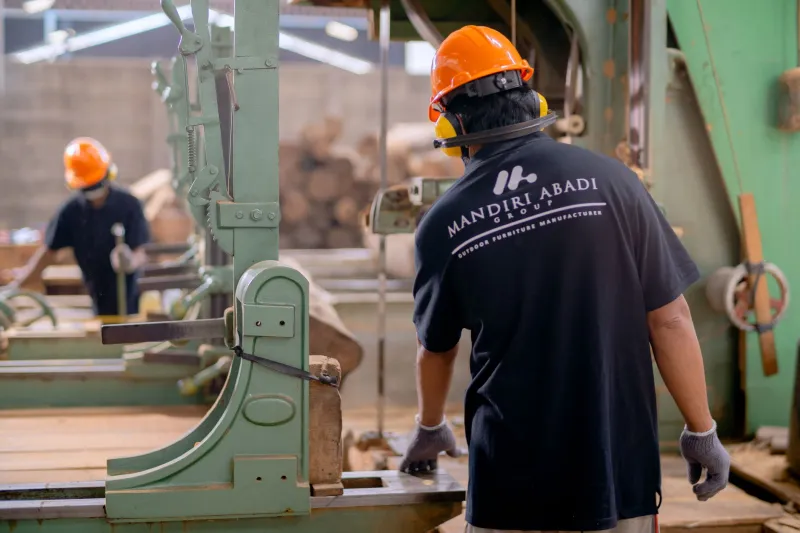
This may be Indonesia's most underappreciated export strength. The country is a dominant global supplier of teak, rattan, and tropical hardwood furniture, with a well-established artisan and industrial manufacturing base centered in Central Java. US importers in the home décor and furniture retail space who are not actively sourcing from Indonesia are almost certainly overpaying elsewhere.
Understanding the Trade Dynamics Before You Engage
US importers entering the Indonesian market for the first time should approach it with a structured due diligence framework rather than ad hoc supplier outreach.
Tariff and Trade Agreement Context
The United States and Indonesia do not currently have a bilateral free trade agreement, which means most Indonesian goods enter the US under standard Most Favored Nation (MFN) tariff rates. However, Indonesia remains eligible for the Generalized System of Preferences (GSP) for certain product categories — a program that has experienced periodic lapses but remains a reference point for tariff planning. US importers should verify current GSP eligibility for specific HS codes before finalizing cost models.
Supplier Verification
Indonesia's supplier ecosystem is large and variable in quality. Buyers should prioritize factories that hold internationally recognized certifications — ISO 9001 for quality management, SA8000 for labor standards, and sector-specific certifications such as OEKO-TEX for textiles. Third-party factory audits conducted by reputable inspection firms with Indonesian operations are a non-negotiable component of initial supplier qualification.
Payment and Contract Structuring
Indonesian manufacturers typically work with Letters of Credit or Telegraphic Transfer payment terms. First-time buyers may encounter requests for higher advance payment percentages than they are accustomed to from more established sourcing relationships. Building payment milestone structures that align disbursements with production verification checkpoints is advisable, particularly for orders above $50,000.
Logistics and Lead Times
The primary export gateway for most Indonesian manufactured goods is the Port of Tanjung Priok in Jakarta, one of Southeast Asia's busiest container terminals. Transit times to US West Coast ports run approximately 20 to 25 days under normal conditions. Importers sourcing from facilities outside Java should factor in domestic inter-island freight, which can add three to seven days to the overall lead time and introduce additional coordination requirements.
Building a Durable Sourcing Relationship
Indonesia rewards importers who invest in the relationship rather than treating it as a transactional exercise. Indonesian business culture places meaningful weight on personal rapport, long-term commitment signals, and face-to-face engagement. Buyers who visit suppliers, communicate consistently, and demonstrate genuine interest in the supplier's operational constraints tend to secure better pricing, priority production scheduling, and more transparent communication about capacity issues.
For US companies without existing regional networks, engaging an experienced sourcing agent with established Indonesian supplier relationships can compress the qualification timeline substantially. Several US-based sourcing consultancies maintain permanent staff in Jakarta and Surabaya specifically for this purpose.
The Diversification Argument Is Already Closing
The strategic rationale for diversifying away from over-concentrated sourcing in any single country has been validated repeatedly over the past five years — by pandemic-era shutdowns, by tariff escalation, by geopolitical friction, and by plain capacity constraints. Indonesia does not eliminate supply chain risk. No single sourcing decision does. But it offers US importers a credible, scalable, and increasingly accessible alternative that most of their competitors have not yet fully explored.
That window of competitive advantage is not permanent. As more US buyers recognize what Indonesia offers, supplier availability will tighten and pricing leverage will compress. The importers who build Indonesian sourcing relationships now — before the market becomes crowded — will be the ones best positioned when the next disruption arrives.
For US retailers and importers ready to move beyond the familiar, Indonesia is not a frontier market in the speculative sense. It is a proven manufacturing economy that the American sourcing community has simply been slow to claim.