

Manual Treadmill Non Electric
Add a review FollowOverview
-
Founded Date June 9, 1921
-
Sectors Recruting Company
-
Posted Jobs 0
-
Viewed 2
Page Options
-
Title 20 Myths About Non Powered Treadmills: Debunked
-
Layout default
-
Content Alignment default
-
Sidebar Position default
-
Custom Widgets Area default
-
Header Styles default
Company Description
20 Myths About Non Powered Treadmills: Debunked
Non-Powered Treadmills: A Comprehensive Guide
In a world that significantly values benefit and state-of-the-art solutions, it’s simple to overlook the benefits of easier alternatives. Non-powered treadmills, typically referred to as Manual Treadmill Cheap treadmills, have been making a noteworthy comeback in physical fitness circles. These devices offer a special exercise experience that stresses engagement, control, and a few unexpected benefits. This guide will check out the different aspects of non-powered treadmills, from their functions and advantages to contrasts with conventional powered designs.
What is a Non-Powered Treadmill?
Non-powered treadmills operate without electricity. Instead of counting on a motor to move the belt, these treadmills use a self-propelled style, allowing the user to determine the speed and strength of their exercise. This makes them more energy-efficient and often more affordable than their powered equivalents.
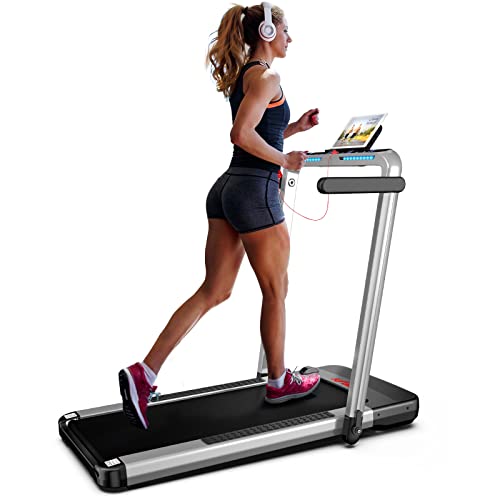
Benefits of Non-Powered Treadmills
-
Economical: Without the requirement for electricity or complex parts, non-powered treadmills are usually less costly than conventional models.
-
Mobility: Many non-powered treadmills are lighter and simpler to move, making them suitable for small spaces or for people who may desire to utilize them in various locations.
-
Customized Workouts: Users can manage the rate and strength, enabling a more customized workout experience.
-
Lower Impact on Joints: Many models are designed to provide much better cushioning, making them a great choice for those with joint concerns.
-
Durability: With less mechanical parts that can fail, non-powered treadmills have the potential for a longer life-span.
-
Flexible Training: They are ideal for not only running but likewise walking, jogging, and even practical training.
Table: Comparison Between Non-Powered and Powered Treadmills
| Function | Non-Powered Treadmills | Powered Treadmills |
|---|---|---|
| Power Source | Manual | Electric |
| Cost | Normally lower | Usually greater |
| Portability | High | Low |
| Exercise Customization | High (user-controlled) | Medium (pre-programmed programs) |
| Maintenance | Low | Greater |
| Joint Impact | Lower | Differs by model |
| Speed Range | Variable | Set range |
How Non-Powered Treadmills Work
Unlike traditional treadmills, which depend on a motor to move the belt and track speed, non-powered treadmills use the user’s motion to propel the treadmill. The user needs to push off the belt, which rotates under their feet. This design encourages users to engage more muscles, including their core, making for a more effective exercise.
Popular Types of Non-Powered Treadmills
1. Curved Non-Powered Treadmills
These treadmills have a curved running surface that enables a smoother, more natural running experience. The curvature enables a higher variety of motion and promotes proper running form.
2. Standard Manual Treadmills
These are the more standard design of non-powered treadmills, including a flat running surface area. They are often cheaper and easier in design, making them a popular option for home fitness centers.
3. Hybrid Non-Powered Treadmills
These models may consist of features from both non-powered and powered treadmills. They typically have resistance settings that can be adjusted for varying levels of strength.
Table: Types of Non-Powered Treadmills
| Type | Description | Suitable For |
|---|---|---|
| Curved | Curved surface promotes natural running. | Major runners and professional athletes. |
| Standard | Flat surface area, basic design, often affordable. | Casual users and home health clubs. |
| Hybrid | Combines functions of both types, with adjustable resistance. | Users looking for adaptability. |
Key Features to Consider
When selecting a non-powered treadmill, prospective purchasers should consider a number of features to guarantee they choose the ideal model for their requirements.
- Belt Design: Look for top quality materials to guarantee durability and minimize wear.
- Weight Capacity: Different models support varying weight limitations. Ensure the model can safely accommodate your weight.
- Size: Consider the dimensions of the treadmill and whether it fits your available area.
- User Feedback: Some designs come with performance tracking alternatives that enable users to monitor their distance, speed, and calories burned.
- Deal with Design: Higher-quality designs will have ergonomic manages that offer stability and comfort during use.
Integrating Non-Powered Treadmills into a Fitness Routine
Integrating a non-powered treadmill into an exercise routine can be rather reliable when combined with other workouts. Here are some pointers:
- Interval Training: Alternate in between high-intensity sprints and lower-intensity walking or running.
- Cross-Training: Use the treadmill on non-strength training days to maintain cardio without overexerting your muscles.
- Practical Training: Incorporate bodyweight workouts, such as squats and lunges, in between treadmill sessions for a full-body exercise.
FAQs About Non-Powered Treadmills
Q1: Are non-powered treadmills ideal for newbies?
A1: Yes, they are great for beginners. The user manages the pace, permitting them to gradually increase strength as they become more comfortable.
Q2: How do I keep a non-powered treadmill?
A2: Maintenance is very little. Regular cleaning and examining for any wear on the belt will guarantee longevity.
Q3: Can I utilize a non-powered treadmill for walking?
A3: Absolutely! Non-powered treadmills are flexible and can be used for walking, jogging, or running.
Q4: How do non-powered treadmills compare in calorie burn to powered treadmills?
A4: Non-powered treadmills can frequently cause a higher calorie burn due to the increased effort needed to move the belt.
Q5: What should I try to find when acquiring a non-powered treadmill?
A5: Consider elements like size, weight capacity, belt quality, and adjustable resistances if you’re choosing a hybrid design.
Non-powered treadmills provide an exciting option to conventional powered models. With their price, mobility, and capacity for a more engaging workout, they are appropriate for anyone looking to boost their physical fitness program. Whether you’re a seasoned professional athlete or just starting your journey, a non-powered treadmill might be the perfect addition to your home gym. Offered their rising popularity, it’s clear that simpleness can frequently result in powerful results.
 Manpower Supply & HR Management
 International Job Manpower Supply
 Training & Placements
 BPO Projects
 Web Development
 Software Development
 Mobile App Development
 Digital Marketing